

Destinations, Considered: The Shift Away from the Obvious
Why this matters now
For years, retreat strategy defaulted to the expected. Major metros. Recognizable skylines. Built-in prestige.
The assumption was simple: If it looks important, it must create impact.
But that equation is starting to break.
What’s changing
There’s a noticeable shift toward destinations outside the usual circuit, not because they’re secondary, but because they’re smarter.
Places like:
Emerging coastal towns
Mountain enclaves
Design-forward college cities
Under-the-radar cultural hubs
Not as a compromise. As a strategy.
Why it works
These environments do something traditional destinations often can’t.
They create distance from routine.
And distance creates clarity.
Fewer distractions
Stronger group cohesion
More immersive, contained venues
Greater flexibility for buyouts and customization
When a place feels discovered rather than default, teams show up differently.
More present.
More engaged.
More open to doing the work that actually matters.
The takeaway
The future of retreats isn’t about skyline views.
It’s about environments that support:
focus
strategy
connection
Places that hold attention instead of competing for it.
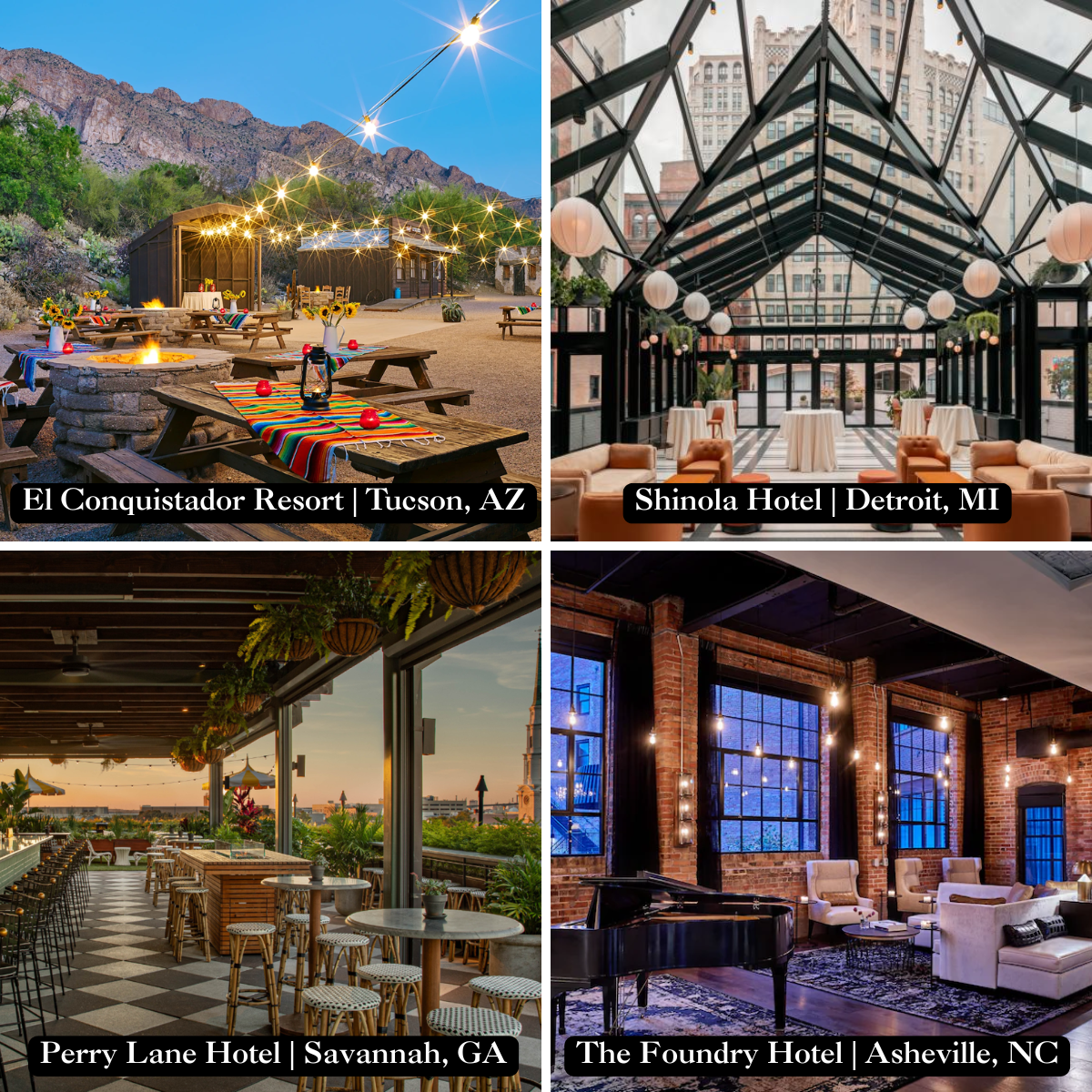
Excellent Group-Friendly Hotels in Second & Third Tier Cities
The most effective retreats don’t just change the conversation. They change the environment it happens in.
If you’re planning offsites or leadership gatherings, this is where location strategy becomes one of the most important decisions you make.
